Managing Your Septic Tank
Septic tanks treat and dispose of household waste water. It is important to remove insoluble solids from the tank annually for it to run efficiently.
All Septic Tanks Work On The Same Principles
Here at Walsh Waste we take great pride in helping you maintain a working septic tank system.
Waste from your home enters the tank here.
There is usually an inspection chamber here allowing us to check for correct flow along the main sewage outlet from the property. It can also be used as a rodding point to clear blockages. A T Pipe on the inlet forces solids to sink to the bottom of the tank, preventing them from entering the percolation area. Here solids are broken down a layer of scum forms on the top and this bacteria helps break down the waste.
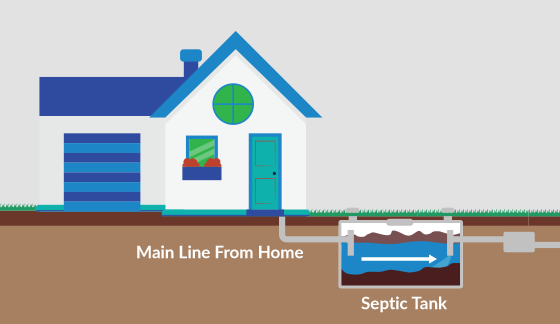
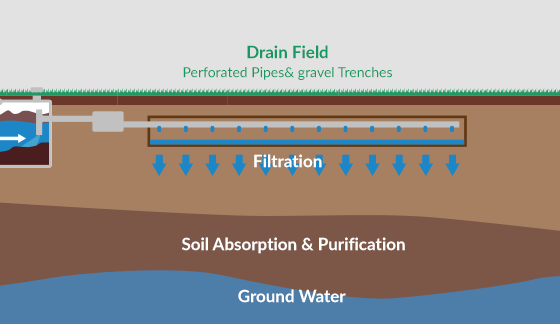
Treated waste water then flows through to the percolation area, where it soaks away into the earth.
Any solids that are insoluble stay at the bottom of the tank as sludge. The build-up of sludge in the tank is what needs to be removed annually in order for the tank to run efficiently.
Here are some telltale signs that your tank Is In need of emptying
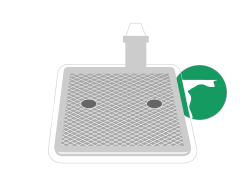
Dark black stains around openings
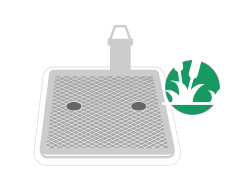
Soft and wet ground near your septic tank
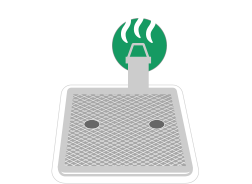
Overflowing or a strong smell
Before Booking Your Service
Make sure all of the manhole covers are exposed.
There is usually an inspection chamber here allowing us to check for correct flow along the main sewage outlet from the property. It can also be used as a rodding point to clear blockages. A T Pipe on the inlet forces solids to sink to the bottom of the tank, preventing them from entering the percolation area. Here solids are broken down a layer of scum forms on the top and this bacteria helps break down the waste.
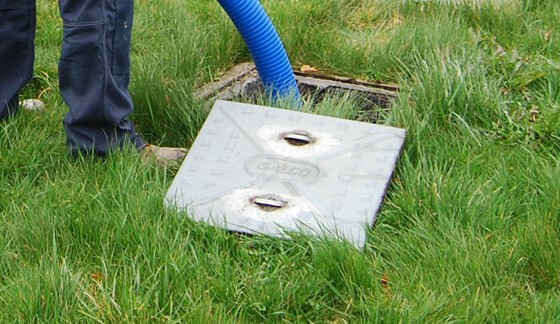
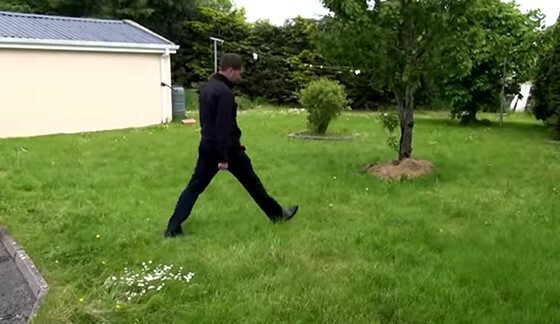
Measure the distance from where your truck will be parked to your septic tank.
Any solids that are insoluble stay at the bottom of the tank as sludge. The build-up of sludge in the tank is what needs to be removed annually in order for the tank to run efficiently.
All Septic Tanks Work On The Same Principles
Here at Walsh Waste we take great pride in helping you maintain a working septic tank system.
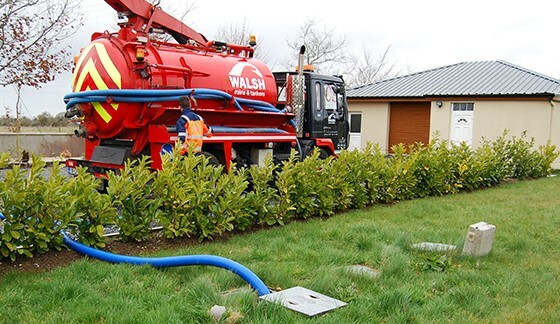
- The pipes are first laid out and the contents of the tanker sucked out with a suction hose.
- The pipe lines between the house and the tank and the percolation area are jetted and cleared of any blockages.
- The sludge removed is disposed of to a licensed facility and you will be issued with a treatment certificate giving you peace of mind and a safe environment for you and your family.
- We issue a Treatment Certificate from your Local Council.
Before Booking Your Service
Find out more about Septic Tank regulations by visiting the epa website.
Managing Your Septic Tank
Septic tanks treat and dispose of household waste water. It is important to remove insoluble solids from the tank annually for it to run efficiently.